𝗖𝗮𝗻 𝗔𝗴𝗲𝗻𝘁𝗶𝗰 𝗔𝗴𝗲𝗻𝘁𝘀 𝗘𝗻𝗮𝗯𝗹𝗲 𝗦𝗵𝗶𝗳𝘁-𝗟𝗲𝗳𝘁 𝗳𝗼𝗿 𝗘𝗻𝘁𝗲𝗿𝗽𝗿𝗶𝘀𝗲 𝗗𝗲𝗹𝗶𝘃𝗲𝗿𝘆 𝗧𝗲𝗮𝗺𝘀?
Shift-left in enterprise delivery has never fully worked because too much information is still recreated and reinterpreted across stages. Agentic agents change this by structuring inputs early and carrying them forward, reducing misalignment and rework. This enables delivery teams to engage earlier with clarity, shifting from translating information to executing against aligned, consistent outputs.
Dawn Thiart
3/22/20261 min read
Shift-left works in support and DevOps.
But in enterprise delivery?
We’re still operating right-heavy.
By the time we get to build:
• Requirements get rewritten and reviewed multiple times
• Context has been diluted across handovers
• Design is based on interpretation, not original intent
And we spend the rest of the project correcting it.
𝗪𝗲’𝘃𝗲 𝗮𝗰𝗰𝗲𝗽𝘁𝗲𝗱 𝘁𝗵𝗶𝘀 𝗮𝘀 𝗻𝗼𝗿𝗺𝗮𝗹.
But it’s why delivery slows down, costs increase, and quality becomes inconsistent — especially across complex implementations like Dynamics F&O, CE, and Project Operations.
𝗦𝗼 𝘄𝗵𝗮𝘁 𝗱𝗼𝗲𝘀 𝘀𝗵𝗶𝗳𝘁-𝗹𝗲𝗳𝘁 𝗮𝗰𝘁𝘂𝗮𝗹𝗹𝘆 𝗹𝗼𝗼𝗸 𝗹𝗶𝗸𝗲 𝗳𝗼𝗿 𝗱𝗲𝗹𝗶𝘃𝗲𝗿𝘆 𝘁𝗲𝗮𝗺𝘀?
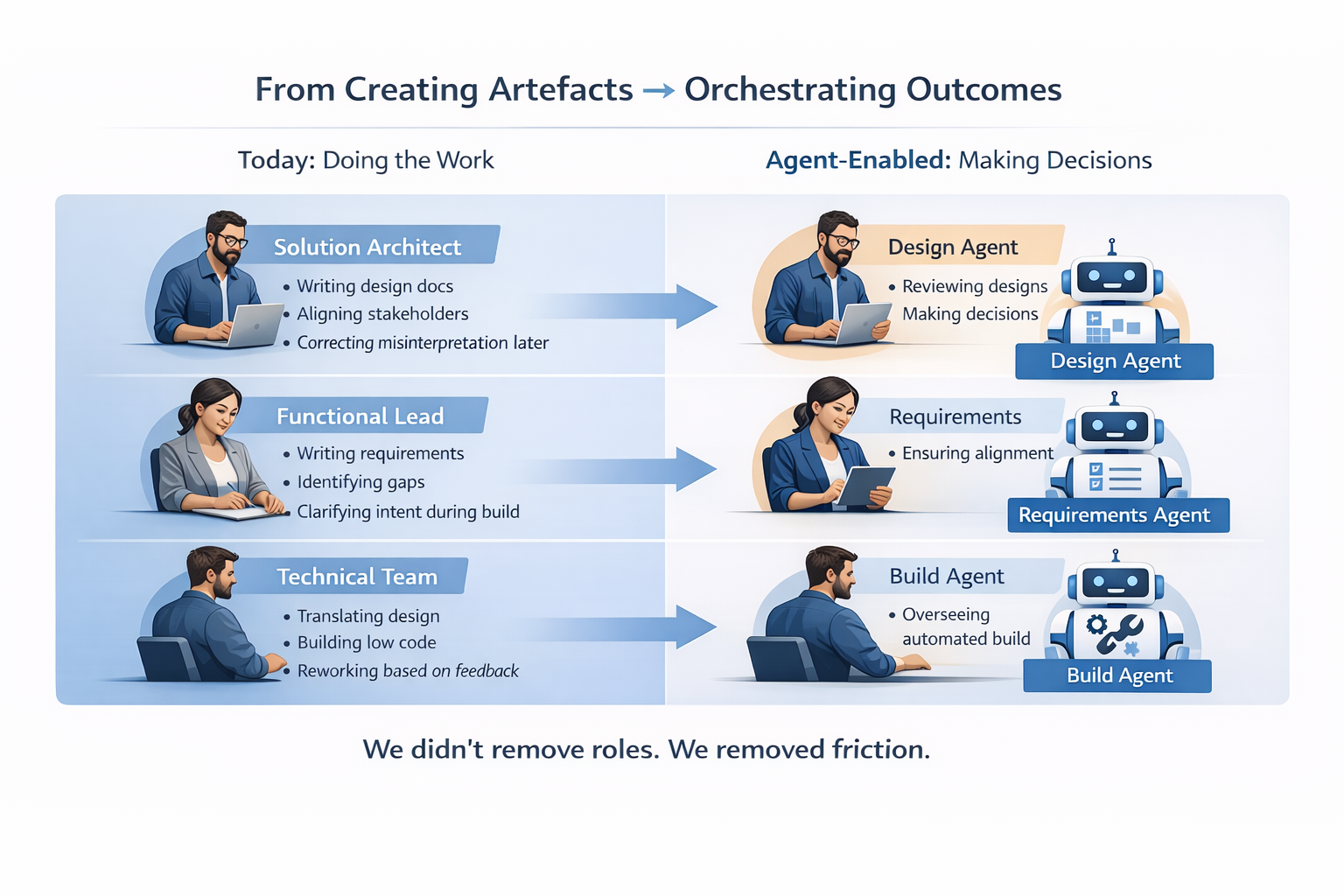
𝗧𝗼𝗱𝗮𝘆 𝘃𝘀 𝗔𝗴𝗲𝗻𝘁-𝗘𝗻𝗮𝗯𝗹𝗲𝗱
𝗦𝗼𝗹𝘂𝘁𝗶𝗼𝗻 𝗔𝗿𝗰𝗵𝗶𝘁𝗲𝗰𝘁
Today: Writing design documents, aligning stakeholders, correcting misinterpretation later
With agents: Reviewing generated designs, making architectural decisions earlier, governing outcomes
𝗙𝘂𝗻𝗰𝘁𝗶𝗼𝗻𝗮𝗹 𝗟𝗲𝗮𝗱
Today: Rewriting requirements from workshops, identifying gaps, clarifying intent during build
With agents: Reviewing generated requirements, validating gaps and assumptions
𝗧𝗲𝗰𝗵𝗻𝗶𝗰𝗮𝗹 𝗧𝗲𝗮𝗺
Today: Building flows and plugins, writing low-code, reworking based on feedback
With agents: Describing what needs to be built and executing against aligned, pattern-driven design
𝗪𝗵𝗮𝘁 𝗰𝗵𝗮𝗻𝗴𝗲𝘀?
• Inputs are structured from the start (proposal → requirements → design)
• Context is carried forward, not recreated
• Content is generated, not manually written
• Design is consistent, not reinvented
Instead of fixing downstream issues, we prevent them upstream.
From 𝗰𝗿𝗲𝗮𝘁𝗶𝗻𝗴 𝗮𝗿𝘁𝗲𝗳𝗮𝗰𝘁𝘀 → to 𝗼𝗿𝗰𝗵𝗲𝘀𝘁𝗿𝗮𝘁𝗶𝗻𝗴 𝗮𝗻𝗱 𝗿𝗲𝘃𝗶𝗲𝘄𝗶𝗻𝗴 𝗼𝘂𝘁𝗰𝗼𝗺𝗲𝘀.
Here is that sentence again.
If we get this right, we move faster, we remove the need to fix things later.
In the next post, I’ll explore how a 𝗣𝗿𝗼𝗽𝗼𝘀𝗮𝗹 𝗔𝗴𝗲𝗻𝘁 can structure delivery before a project even kicks off.