𝗢𝗿𝗰𝗵𝗲𝘀𝘁𝗿𝗮𝘁𝗶𝗻𝗴 𝗗𝗲𝘀𝗶𝗴𝗻 𝘁𝗼 𝗖𝗼𝗻𝗳𝗶𝗴 𝗶𝗻 𝘁𝗵𝗲 𝗦𝗗𝗟𝗖: 𝗔 𝗣𝗿𝗮𝗰𝘁𝗶𝗰𝗮𝗹 𝗘𝘅𝗮𝗺𝗽𝗹𝗲
Most delivery teams still spend too much time translating and rewriting what already exists. This post walks through a practical “design to config” approach, where inputs are orchestrated through a set of agents to produce structured, build-ready outputs. It’s not about replacing people—it’s about shifting effort from creating artefacts to reviewing and governing them. The result is cleaner handoffs, earlier visibility of gaps, and a more controlled path from requirements to build. The real shift isn’t automation. It’s moving work left—so design, validation, and alignment happen before the build even starts.
Dawn Thiart
4/5/20261 min read
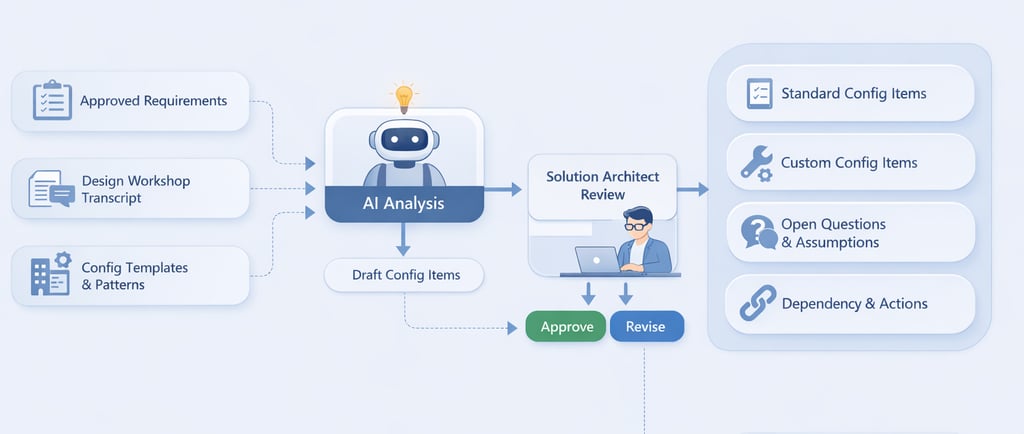
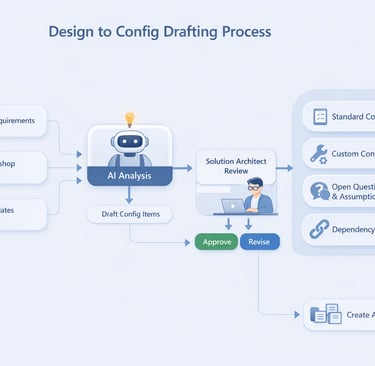
(creating artefacts → orchestrating outcomes)
Think of it as a small agentic delivery system — not a single agent.
𝟭. 𝗜𝗻𝗽𝘂𝘁𝘀 𝗰𝗼𝗺𝗲 𝗶𝗻
• approved requirements
• workshop transcripts
• templates and design patterns
• data models and integration standards
These already exist — but are spread across documents and notes.
𝟮. 𝗢𝗿𝗰𝗵𝗲𝘀𝘁𝗿𝗮𝘁𝗼𝗿 𝗔𝗴𝗲𝗻𝘁 (𝗰𝗼𝗻𝘁𝗿𝗼𝗹 𝗹𝗮𝘆𝗲𝗿)
Its role is to:
• understand the request
• select the right agents
• sequence the work
• consolidate outputs
• route exceptions to human review
𝟯. 𝗦𝗽𝗲𝗰𝗶𝗮𝗹𝗶𝘀𝘁 𝗮𝗴𝗲𝗻𝘁𝘀
𝗥𝗲𝗾𝘂𝗶𝗿𝗲𝗺𝗲𝗻𝘁𝘀 𝗔𝗴𝗲𝗻𝘁
→ converts requirements into config intent
𝗣𝗮𝘁𝘁𝗲𝗿𝗻 𝗔𝗴𝗲𝗻𝘁
→ maps to standard patterns:
• Outlook integration
• account/contact/opportunity model
• business rules
• F&O field integration
• approval workflows
𝗖𝗼𝗻𝗳𝗶𝗴 𝗔𝗴𝗲𝗻𝘁
→ generates draft config items:
• integration field mapping
• business rules
• security roles
• approval flows
• BPF stage logic
• Outlook/email config
𝗩𝗮𝗹𝗶𝗱𝗮𝘁𝗶𝗼𝗻 𝗔𝗴𝗲𝗻𝘁
→ identifies gaps, conflicts, assumptions, dependencies
𝗗𝗲𝗹𝗶𝘃𝗲𝗿𝘆 𝗔𝗴𝗲𝗻𝘁
→ produces build-ready config tickets
𝟰. 𝗛𝘂𝗺𝗮𝗻 𝗿𝗲𝘃𝗶𝗲𝘄
• Solution Architect → design integrity
• Functional Lead → business accuracy
• Technical Lead (if required)
This step ensures control — not uncontrolled automation.
𝟱. 𝗢𝘂𝘁𝗽𝘂𝘁𝘀
• standard + custom config items
• open questions and assumptions
• dependencies and actions
• build-ready tickets
• traceability to requirements
𝗪𝗵𝗮𝘁 𝘀𝗵𝗶𝗳𝘁-𝗹𝗲𝗳𝘁 𝗹𝗼𝗼𝗸𝘀 𝗹𝗶𝗸𝗲
𝗧𝗼𝗱𝗮𝘆
• interpret requirements
• map patterns manually
• write config from scratch
• resolve gaps late
𝗪𝗶𝘁𝗵 𝘁𝗵𝗶𝘀 𝗺𝗼𝗱𝗲𝗹
• orchestrated flow
• generated draft outputs
• review replaces creation
The shift
𝗦𝗼𝗹𝘂𝘁𝗶𝗼𝗻 𝗔𝗿𝗰𝗵𝗶𝘁𝗲𝗰𝘁
write design → govern outputs
𝗙𝘂𝗻𝗰𝘁𝗶𝗼𝗻𝗮𝗹 𝗟𝗲𝗮𝗱
translate requirements → validate structure
𝗧𝗲𝗰𝗵𝗻𝗶𝗰𝗮𝗹 𝗧𝗲𝗮𝗺
interpret design → build from standardised config