𝗧𝗵𝗲 𝗖𝗮𝘀𝗲 𝗳𝗼𝗿 𝗛𝘆𝗯𝗿𝗶𝗱 𝗜𝗻𝘁𝗲𝗴𝗿𝗮𝘁𝗶𝗼𝗻 𝗶𝗻 𝗔𝗜𝗦 𝗔𝗿𝗰𝗵𝗶𝘁𝗲𝗰𝘁𝘂𝗿𝗲
Most integrations chase real-time performance, but in enterprise environments that’s often the wrong priority. This post explores why a batch-first approach, combined with orchestration using Power Automate, delivers stronger control, resilience, and auditability—especially across platforms like Dataverse and Dynamics 365. It breaks down how deterministic processing, idempotency, and structured retries create systems that are not only reliable, but recoverable when things go wrong. If you’re designing integrations that need to stand up under pressure, this is the pattern worth paying attention to.
Dawn Thiart
2/1/20261 min read
Some integrations fail because they optimise for speed instead of control.
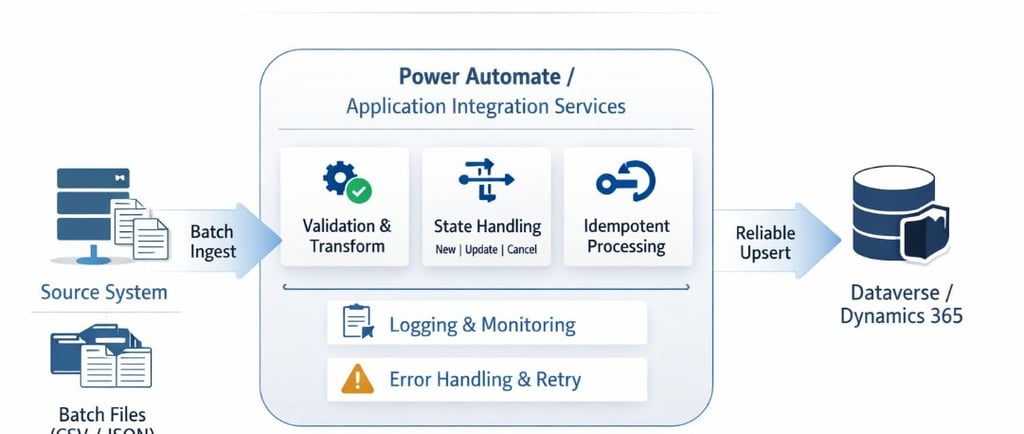
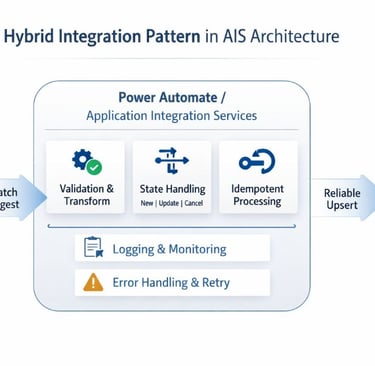
In some enterprise environments, especially across operational platforms, 𝗰𝗼𝗿𝗿𝗲𝗰𝘁𝗻𝗲𝘀𝘀, 𝗿𝗲𝘀𝗶𝗹𝗶𝗲𝗻𝗰𝗲, 𝗮𝗻𝗱 𝘁𝗿𝗮𝗰𝗲𝗮𝗯𝗶𝗹𝗶𝘁𝘆 𝗯𝗲𝗮𝘁 𝗿𝗲𝗮𝗹-𝘁𝗶𝗺𝗲 𝗲𝘃𝗲𝗿𝘆 𝗱𝗮𝘆. Within modern 𝗔𝗽𝗽𝗹𝗶𝗰𝗮𝘁𝗶𝗼𝗻 𝗜𝗻𝘁𝗲𝗴𝗿𝗮𝘁𝗶𝗼𝗻 𝗦𝗲𝗿𝘃𝗶𝗰𝗲𝘀 (𝗔𝗜𝗦) architecture, I find this pattern continues to deliver consistently: B𝗮𝘁𝗰𝗵 𝗶𝗻𝗴𝗲𝘀𝘁𝗶𝗼𝗻 𝗰𝗼𝗺𝗯𝗶𝗻𝗲𝗱 𝘄𝗶𝘁𝗵 𝗼𝗿𝗰𝗵𝗲𝘀𝘁𝗿𝗮𝘁𝗶𝗼𝗻 (𝗣𝗼𝘄𝗲𝗿 𝗔𝘂𝘁𝗼𝗺𝗮𝘁𝗲).
This is an architectural choice.
𝗕𝗮𝘁𝗰𝗵 𝗽𝗿𝗼𝘃𝗶𝗱𝗲𝘀 𝘁𝗵𝗲 𝗰𝗼𝗻𝘁𝗿𝗼𝗹 𝗹𝗮𝘆𝗲𝗿
• Deterministic, repeatable processing
• Safe reprocessing (idempotent by design)
• Full auditability and traceability
• Controlled load on Dataverse / D365
• Fault isolation — bad records don’t stop the system
𝗢𝗿𝗰𝗵𝗲𝘀𝘁𝗿𝗮𝘁𝗶𝗼𝗻 𝗽𝗿𝗼𝘃𝗶𝗱𝗲𝘀 𝘁𝗵𝗲 𝗶𝗻𝘁𝗲𝗹𝗹𝗶𝗴𝗲𝗻𝗰𝗲
• Detect and ingest batch securely
• Validate and transform data
• Interpret business intent (New / Update / Cancel)
• Execute idempotent upserts using external keys
• Manage partial failure and retries
• Produce operational logs and visibility
In a recent Excel → Dataverse design, the source system will produce structured batch extracts while the orchestration layer enforces lifecycle logic, state transitions, and controlled processing. The outcome is 𝗿𝗲𝗽𝗲𝗮𝘁𝗮𝗯𝗹𝗲, 𝗮𝘂𝗱𝗶𝘁𝗮𝗯𝗹𝗲, 𝗮𝗻𝗱 𝗼𝗽𝗲𝗿𝗮𝘁𝗶𝗼𝗻𝗮𝗹𝗹𝘆 𝘀𝘂𝗽𝗽𝗼𝗿𝘁𝗮𝗯𝗹𝗲.
Real-time has its place when immediacy is critical. But in many enterprise integration scenarios, 𝗮𝗿𝗰𝗵𝗶𝘁𝗲𝗰𝘁𝘂𝗿𝗮𝗹 𝗰𝗼𝗻𝘁𝗿𝗼𝗹 𝗺𝗮𝘁𝘁𝗲𝗿𝘀 𝗺𝗼𝗿𝗲 𝘁𝗵𝗮𝗻 𝘀𝗽𝗲𝗲𝗱.
An integration proves its value when something goes wrong — and the system still protects data, preserves state, and 𝗿𝗲𝗰𝗼𝘃𝗲𝗿𝘀 predictably.